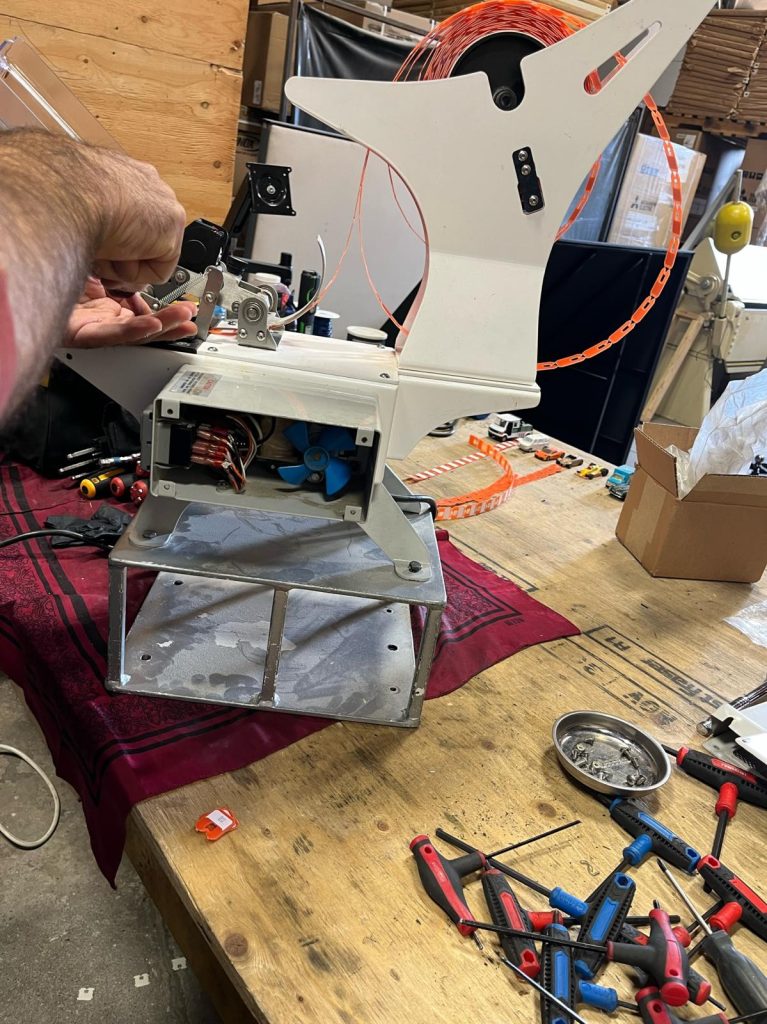
Maintaining a Kwik-Lok bag closing machine
Maintenance of your machinery is essential to ensure its long-term use and to prevent problems and your Quick-Lock (snap-lock) case sealer is no exception. Regular preventive maintenance and check-ins keep your end-of-line running smoothly. (Always follow your machine’s OEM manual for model-specific specs.)
DISCLAIMER – ALWAYS PRACTICE SAFETY
Before any service, Lockout/Tagout power and air. Keep hands clear of pinch points at the infeed rails, flap folders, locking fingers/wheels, compression belts, and discharge. Guards/interlocks must remain in place. If anything looks out of place, stop and contact a service professional.

INFEED & RAIL ALIGNMENT
Remove debris and broken carton fibers. Verify infeed rail squareness to the conveyor centerline and set side-guide width to carton spec (tight enough to square, not crush). Check the squaring station/plows for height and angle so cartons arrive square before locking.
FLAP FOLDERS & LOCKING MECHANISM
Clean dust/adhesive from minor-flap folders, tucker fingers, and locking wheels/cams. Inspect for wear (rounded tips, bent fingers, glazed pads) and replace if damaged. Set timing so tucker engagement happens with the carton fully squared and compression follows immediately—no bounce or double-hit. Verify consistent, crisp lock engagement across all SKUs.
COMPRESSION BELTS & DISCHARGE
Inspect compression belts/rollers for glazing, cuts, or flat spots; replace if worn. Set belt tracking and tension so belts run true without dragging. Adjust compression pressure & dwell to seat locks fully (just enough force to engage tabs without crushing board). Confirm discharge rails are aligned to prevent pop-opens.
CHANGE PARTS & CARTON SPEC
Check change-part settings (guides, plows, folders) match the current carton. Verify board caliper and score quality—weak scores cause poor locks. Keep a one-page changeover gauge with target gaps/heights for each SKU and mark positions to speed repeatability.
DRIVE SYSTEM (CHAINS/BELTS/GEARMOTORS)
Inspect drive chains/belts/sprockets for wear and tension; align and lubricate to OEM spec (do not over-lube near cartons). Listen for bearing noise at folders and compression idlers. Check motor/gearbox mounts and couplings; tighten loose fasteners.
SENSORS & INTERLOCKS
Wipe lenses on photoeyes/jam sensors. Test e-stops and gate interlocks weekly. Confirm the “carton present” and “lock complete” sensors change state reliably; mis-reads often show up as random jams or missed locks.
AIR SYSTEM (IF EQUIPPED)
Drain water from filters, check regulators and lines for leaks, and verify pressure is within spec for pneumatic tuckers or clamps. Sticky valves or low pressure lead to inconsistent lock engagement.
LUBRICATION POINTS
Lubricate per your OEM chart: light oil on specified pivots/shafts; no lubricant on contact surfaces that touch carton board or locking pads. Wipe excess to avoid contaminating cartons/belts.
FASTENERS & GUARDS
Vibration loosens hardware. Walk the machine monthly: tighten folder mounts, guide clamps, belt idler brackets, sensor brackets, and ensure all guards are secured and interlocks function.
CONCLUSION
If each part of the Quick-Lock case sealer is cared for, the machine will run reliably for years. Perform these checks monthly (with quick daily wipe-downs and visual checks), and schedule professional preventive maintenance every ~6 months for a full alignment, timing verification, and parts inspection. Add a small spares kit (tucker fingers, springs, compression belt, side-guide rollers, sensors) so you can swap wear parts without extended downtime.