Refurb vs “As-Is”: What We Replace Before Delivery
Buying used packaging equipment shouldn’t feel like a gamble. When you see “as-is,” it typically means the machine has been cleaned and powered on, but there’s no teardown, no wear-part replacement, no commissioning, and no warranty, fine for a secondary line if you have in-house maintenance ready to tinker, but risky if uptime matters. Motion Tek Refurbished is different: we physically tear down the critical mechanisms, replace wear parts, test under load, install and commission on your floor, and back the result with a real warranty and a preventive-maintenance handover.
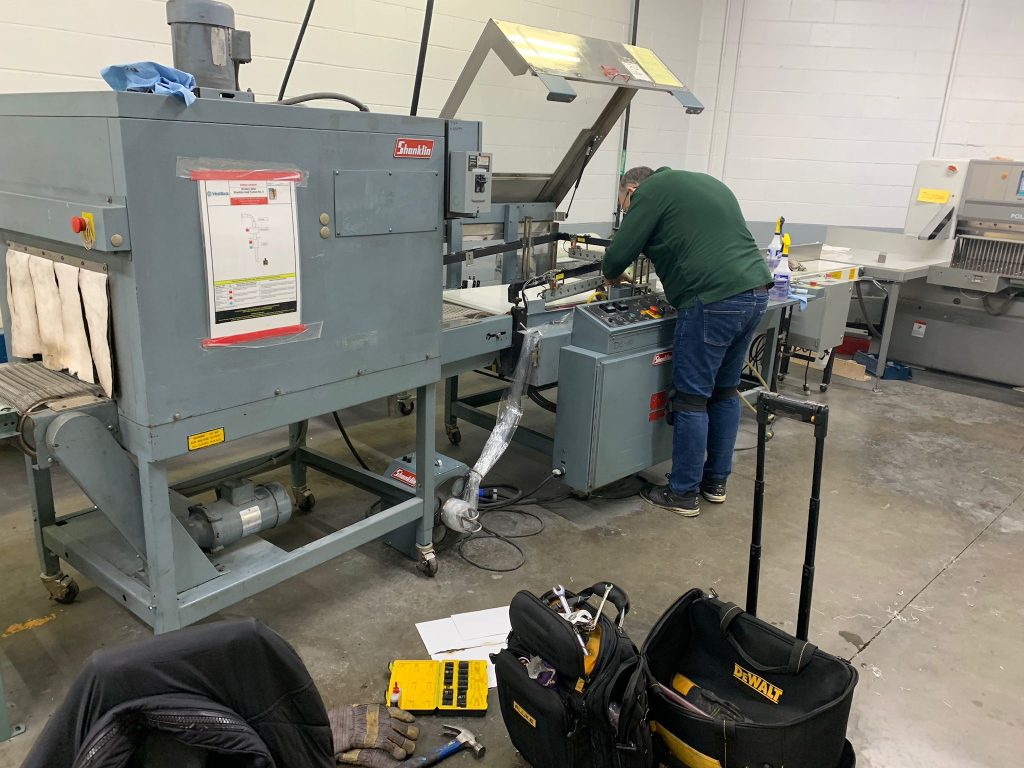
Before delivery, we address the parts that most often cause downtime. On case sealers, we replace or flip the knife and anvil, fit new wipe pads/rollers, refresh return/torsion springs, and reset tape-path fundamentals—leg length, wipe pressure, and brake tension—so seals hold at speed. On stretch wrappers (e.g., Lantech QL-series), we fit a fresh AFC cutter blade, clean or re-pad clamp faces, replace pre-stretch rollers and carriage bushings if they’re scored or loose, swap turntable/drive belts or chains when worn, check load/photo sensors, and re-calibrate pre-stretch ratio, tail length, and wrap force. For conveyors, we change drive belts/chains, suspect idler rollers and bearings, true up tracking and squareness, replace a weak motor run capacitor on AC units, and tighten guarding and fasteners. On labelers/coders, we refresh platen/drive rollers and wiper pads, evaluate the printhead against usage thresholds, and reset media-path alignment and pressure so codes are clean. For checkweighers and x-ray/inspection, we replace belts and guide rollers, remedy flaky presence/height sensors, and run calibrations; where regulation applies, we coordinate OEM/authorized validation so your QA sign-off is straightforward.
Beyond default swaps, we inspect higher-value assemblies—gearmotors, VFDs/servos, couplings, PLC/HMI health, frames and rails, electrical terminations—and replace or repair as condition demands. We also back up programs and parameters so you’re not one fault away from a dead machine. Every unit runs through a proof phase: a dry run post-rebuild, a live product test at your target rate (or worst-case SKU), and an acceptance checklist that covers torque checks, sensor states, belt tracking, and alarms. We hand over documented baseline set-points (tape leg length, wipe pressure, wrap force, line speeds), train operators on quick triage (symptom → checks → when to call a tech), and supply a practical PM schedule plus a recommended starter spares list.
Refurbishment includes support. Our typical package carries a 90-day parts-and-labour warranty (or 250 run-hours, whichever comes first), phone support, and priority on-site coverage in Ontario, Calgary CMA, and Metro Vancouver, with optional 6–12 month extensions bundled to a quarterly PM plan. We can add upgrades as needed: safety and compliance items (guards, interlocks, CSA/PHSR assistance in Ontario), integration work (infeed/outfeed conveyors, coders/labelers, reject/divert), and operator aids such as recipe presets, changeover gauges, and QR-labeled spare-parts bins.
Just as important is what we don’t call “refurb.” A pressure wash and fresh paint without wear-parts replacement isn’t refurbishment. Shipping a machine without install/commissioning, baseline settings, or documentation isn’t refurbishment. If it doesn’t reduce risk and time-to-rate on your line, it doesn’t meet our bar. And through it all, safety comes first: Lockout/Tagout for power and air before service, keep clear of blades, pinch points, and rotating tables/rollers, and leave electrical and regulated inspection systems to qualified personnel.
If you’re weighing a specific unit, send the model and serial plus your target go-live date. We’ll review its condition from photos, quote Refurb vs As-Is side-by-side, outline exactly what we’ll replace before it ships, and give you a realistic install and commissioning window—so you start being productive on day one.